
RWA
The RWA tokenization spectrum: from no claim to native claim
Two tokens can pay the same yield and differ by orders of magnitude in what you legally own. A five-level spectrum for evaluating tokenized RWAs.

RWA
Two tokens can pay the same yield and differ by orders of magnitude in what you legally own. A five-level spectrum for evaluating tokenized RWAs.
vaults
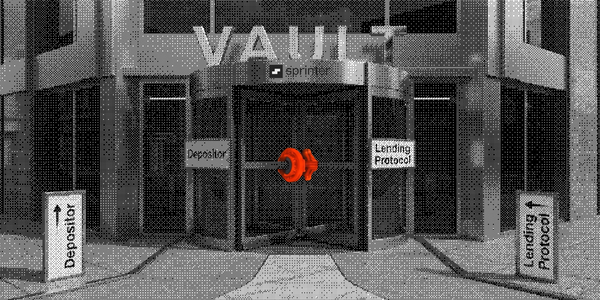
Yield vaults are built for depositors. Lending protocols need something different: they need to liquidate. What an ideal collateral vault looks like.
credit
Three essays call for crypto-native institutions. None defines one. The decentralised intermediary: protocol governance for the on-chain/off-chain boundary.
credit
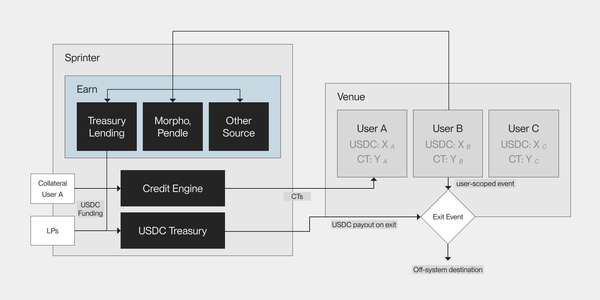
CT systems are not about printing money. They separate high-velocity internal activity from disciplined exits, keeping backing explicit. A design for perps

DeFi
The final part of the series develops a concrete architecture for usage‑constrained credit in crosschain intent fulfillment, then generalizes it to other closed‑loop loans.

Sprinter Stash’s app will officially go live tomorrow at 12pm CET, unlocking a new way for DeFi participants to earn rewards by contributing USDC liquidity to Sprinter Stash.
Announcements
Sprinter Stash is a new onchain credit protocol that powers the next-generation of use cases, from solver credit lines to trading, whilst rewarding LPs with sustainable, risk-managed stablecoin yield.
crosschain
This article is based on the talk ‘Rethinking Competition in Solver-Based Networks’ given at Protocol Berg in Berlin June 13th 2025. (Watch it here) In Part 2, we looked under the hood of real-world solver networks like CoW Protocol and Across. What we found was clear: * A handful of solvers
Research
This post explores how today's competition models in solver-based protocols are evolving — and in some cases, replicating the same centralization dynamics we hoped to escape.